Paul Gauguin (1848-1903), one of the most influential French masters of post-impressionism and symbolism, was born in Paris and, inspired by Camille Pissarro, committed himself to painting following a career in the navy and as a successful stockbroker. At first, he lived a comfortable middle-class life with his family and collected impressionist paintings, but gave up his job in 1883 to live exclusively from art. He soon became impoverished and estranged from his family. Cutting himself off from the bourgeois way of life, he developed his own peculiar, expressive style in Pont-Aven, in Brittany. He also nurtured a tempestuous friendship with Vincent van Gogh.
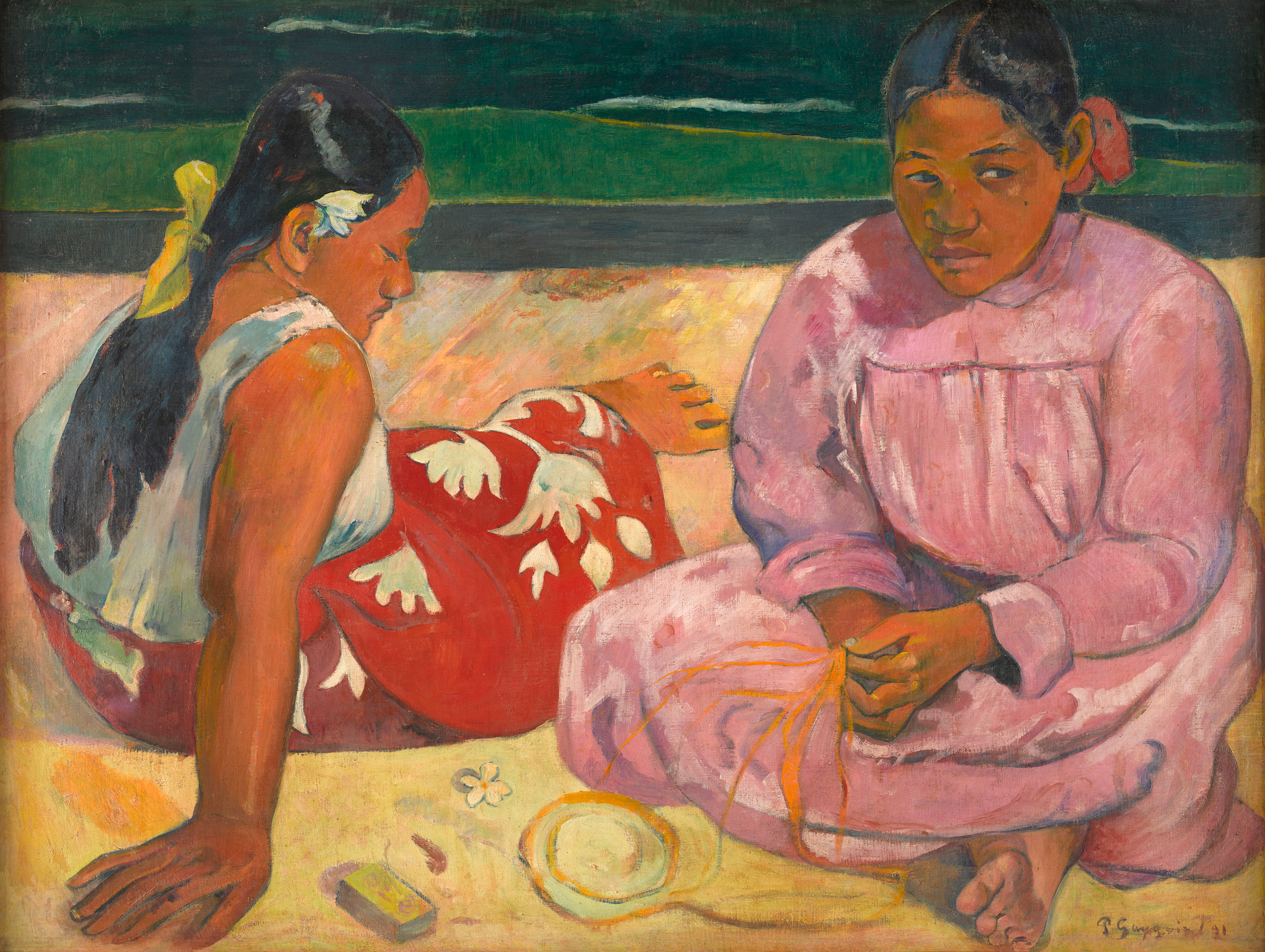
Disillusioned with civilisation, Gauguin yearned for an exotic world and thus moved first to Tahiti in 1890 and later to the Marquesas Islands to live among the indigenous people. It was here that his art, characterised by a world steeped in suppressed mysticism and expressed through planar, decorative forms and pure colours, reached its fullest expression, capturing the world of the local inhabitants. Although he struggled with illnesses, poverty and the authorities towards the end of his life, his paintings became the most valuable treasures after his death in Hiva Oa in 1903, preserved in museums and worth millions of dollars; two of them are held in the collection of the Museum of Fine Arts, Budapest.
.jpg)