The Civilisation of the Qin and Han Dynasties – The First Chinese Emperor’s Terracotta Warriors in the Museum of Fine Arts
2026/02/19
Actualities
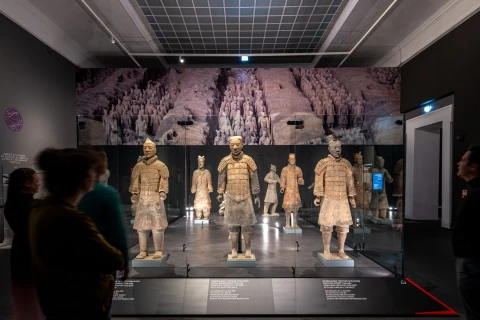
The Museum of Fine Arts’ large-scale presentation of the famous Chinese terracotta warriors runs from 28 November 2025 to 25 May 2026. At the centre of the exhibition spanning more than a millennium is one of the most renowned archaeological discoveries in the world: the Chinese terracotta army and the age of the First Emperor of China.
One of the World’s Most Spectacular Archaeological Assemblages
Open from the end of November, the Museum of Fine Arts’ exhibition titled The Civilization of the Qin and Han Dynasties follows the centuries-long rise of the state of Qin between the 8th century BC and the 3rd century AD, and displays the important ritual objects and symbols of the period. Visitors can gain an insight into everyday life at the time of the First Sovereign Emperor of China, the organisation of his army, its weapons and the individually modelled soldier figures. Qin Shi Huang sought the secret of immortality with great determination, the remarkable objects of which, the chariots intended to convey him to the afterlife, were placed in his tomb and are now included in the Budapest exhibition. Although the death of the First Emperor marked the end of his dynasty, his reign laid the foundations of the Chinese imperial state.
The emergence of the subsequent Han dynasty and the consolidation of imperial power is demonstrated by one of the most significant archaeological sites of the Western Han period, selected finds (middle of the 2nd century BC) from the Han Yangling Museum, which can be seen in the concluding section of the Budapest exhibition. The objects from the tomb of Emperor Jing, the sixth Han ruler, familiarize visitors not only with the history of western expansion and the empire’s engagement in Silk Road trade but also with its daily administration (currency, systems of measurement and the economy). More than one hundred and fifty ancient artefacts are displayed, including ten original figures from the First Emperor’s terracotta army.
Qin Shi Huang and the Rise of the Empire
China’s First Sovereign Emperor, known to historians as Qin Shi Huang, ascended the throne at the age of thirteen in the middle of the 3rd century BC as the ruler of one of the seven warring kingdoms, and governed a vast empire in just a few decades as a result of his conquests. The age of the Qin dynasty marked the unification, consolidation and rise of the Chinese Empire.
The ruler, who died in 210 BC, was buried in his funerary complex as large as a city, constructed over 33 years by hundreds of thousands of labourers. The site comprises numerous tombs, with a reduced-scale representation of the Chinese Empire built at its centre. While the central part of the imperial complex remains unexcavated, Chinese archaeologists have investigated many of its tombs in the past fifty years. The most famous of these contains the life-size terracotta army guarding the tomb of the First Emperor, discovered in 1974 by local farmers digging a well.
All the displayed objects are on loan from museums in Shaanxi province, which includes the former imperial capital of China. The majority originate from the Emperor Qinshihuang’s Mausoleum Site Museum, the Han Yangling Museum, and the Shaanxi Academy of Archaeology. The exhibition was organised by the Museum of Fine Arts, Budapest in conjunction with the Shaanxi Provincial Cultural Heritage Administration and the Emperor Qinshihuang’s Mausoleum Site Museum.
Featured news
-
![Urban Oasis Opens in the Biodome of the Budapest Zoo]()
-
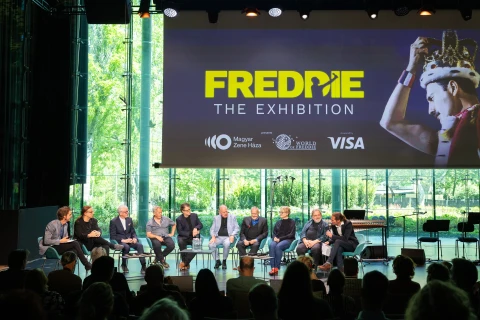
![Freddie Mercury as You Have Never Seen Him Before]()
Freddie Mercury as You Have Never Seen Him Before
-
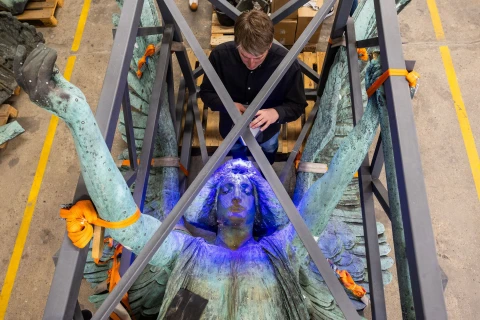
![Iconic Statue of Archangel Gabriel on Heroes’ Square Brought Back to Life]()
Iconic Statue of Archangel Gabriel on Heroes’ Square Brought Back to Life
-
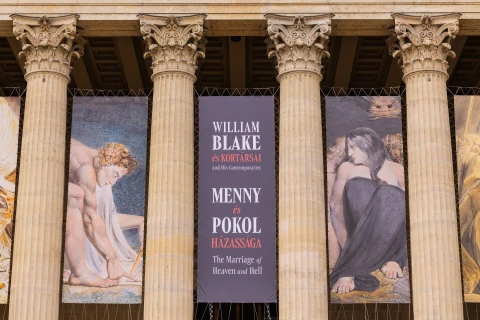
![The Marriage of Heaven and Hell – Works by William Blake at the Museum of Fine Arts]()
The Marriage of Heaven and Hell – Works by William Blake at the Museum of Fine Arts
-
![A new exhibition exploring Freddie Mercury’s personal story to open at the House of Music Hungary]()
A new exhibition exploring Freddie Mercury’s personal story to open at the House of Music Hungary
-
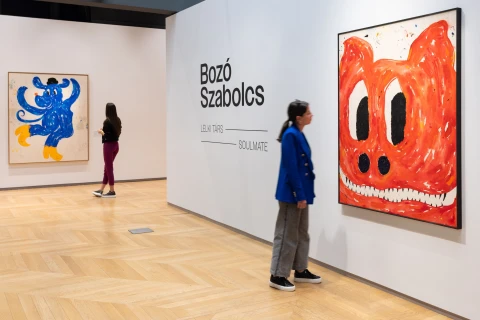
![Hungarian Debut after Global Success: Szabolcs Bozó’s Solo Exhibition Opens at NEO Contemporary Art Space]()
Hungarian Debut after Global Success: Szabolcs Bozó’s Solo Exhibition Opens at NEO Contemporary Art Space
-
![World-renowned Architect of House of Music Hungary Sou Fujimoto Gives Highly Successful Lecture at Expo 2025 Osaka]()
World-renowned Architect of House of Music Hungary Sou Fujimoto Gives Highly Successful Lecture at Expo 2025 Osaka
-
![LISTEN. – A Musical Journey Around the World]()
LISTEN. – A Musical Journey Around the World
-
![Take a selfie with Archangel Gabriel!]()
Take a selfie with Archangel Gabriel!
-
![Discover the enigmatic world of video art through Bill Viola’s Masterpieces!]()
Discover the enigmatic world of video art through Bill Viola’s Masterpieces!
-
![THE MUSEUM OF ETHNOGRAPHY OPENS ITS LARGEST EVER, MOST COMPREHENSIVE PERMANENT EXHIBITION]()
THE MUSEUM OF ETHNOGRAPHY OPENS ITS LARGEST EVER, MOST COMPREHENSIVE PERMANENT EXHIBITION