Navigation

Iconic Statue of Archangel Gabriel on Heroes’ Square Brought Back to Life

Iconic Statue of Archangel Gabriel on Heroes’ Square Brought Back to Life

2026/03/12 Actualities

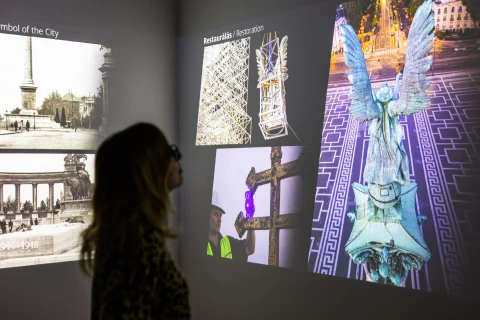
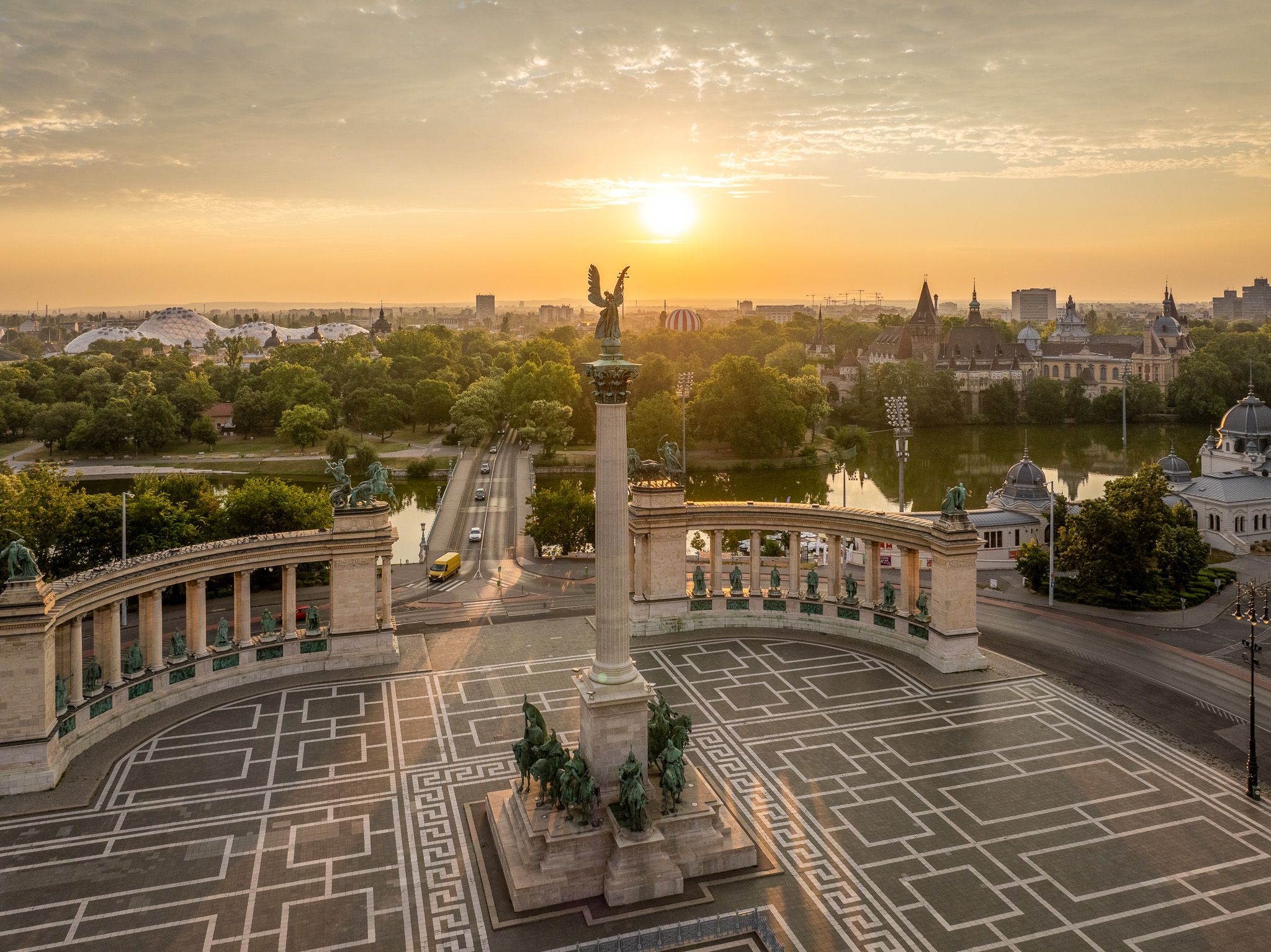
The statue of Archangel Gabriel in Budapest’s Heroes’ Square was removed from its column in autumn 2024, after its condition became critical and intervention could no longer be delayed. The project, coordinated by Városliget Zrt., has now reached an important milestone: the complex scientific and conservation assessment has been completed. It has been established that the statue’s condition was even worse than the most pessimistic assumptions had suggested; however, the original bronze cast of the archangel can be preserved by making full use of the available conservation methods, and the statue is therefore expected to be remounted by the end of this year. The schedule for reinstallation also depends on the stabilisation of the approximately ten-storey-high Corinthian column that serves as a supporting pillar.

A national symbol taken to the conservation workshop


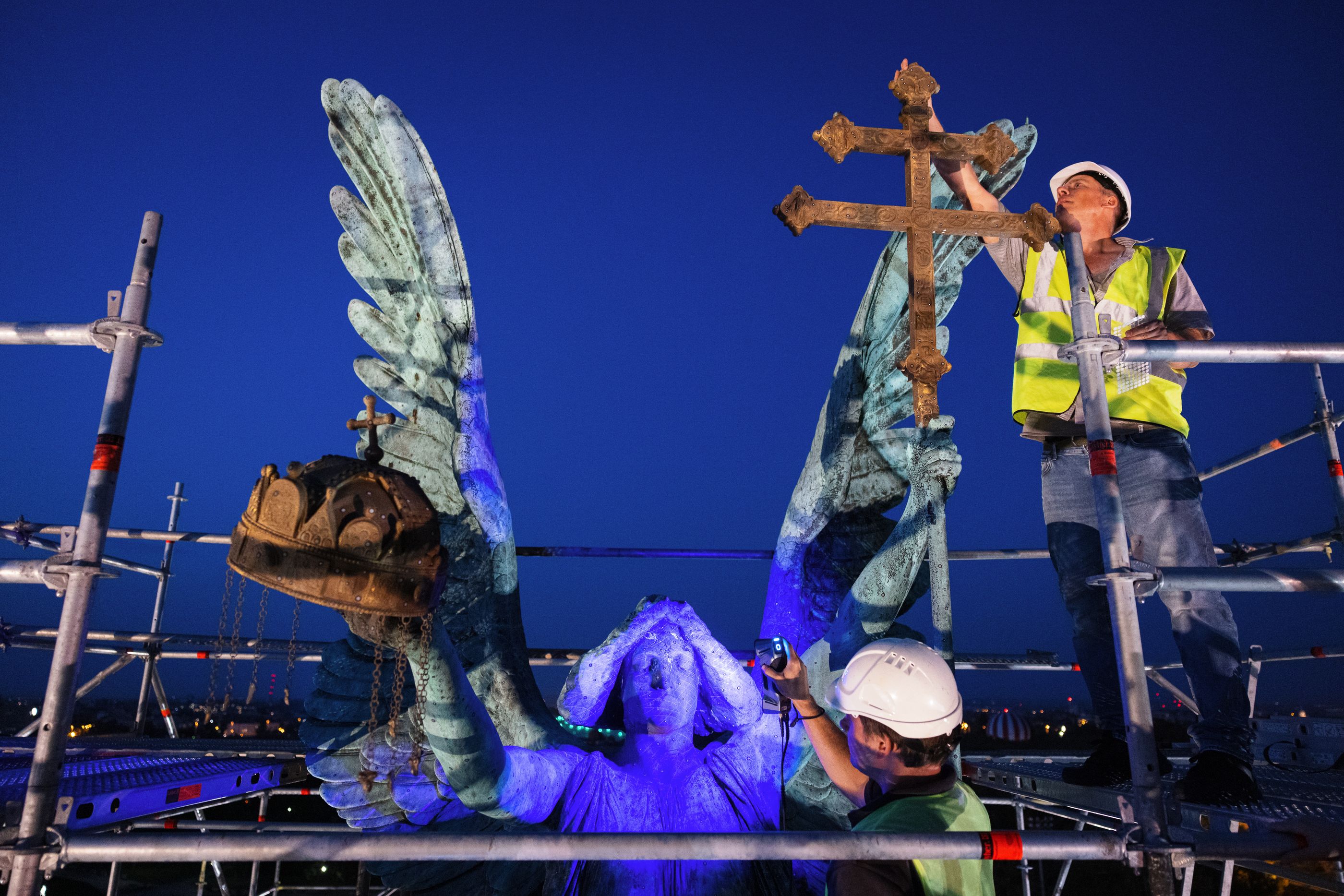
The several-ton sculptural composition, made by Zala György, was dismantled into several parts for removal: the figure of Archangel Gabriel was lowered together with the upper half of the globe beneath his feet, while the Holy Crown of Hungary and the double cross were detached from his hands on site. The more than one hundred individual elements of the Corinthian capital were taken apart and documented with unique identifiers and a consignation map, making sure that each piece can later be returned precisely to its original position. The elements were transported to the conservation workshop by specialised heavy vehicles.

The statue’s condition proved far worse than initially expected

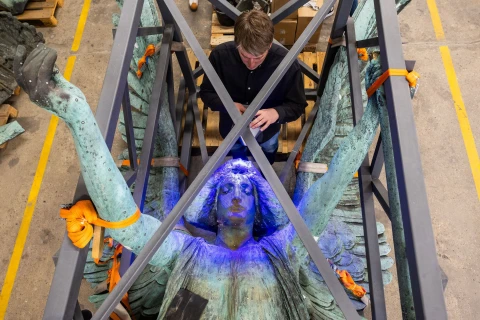
The statue needed to be removed to prevent an immediate hazard. Once the experts were able to examine it more closely, damage far exceeding preliminary expectations was established. The internal iron structure and the original bolted joints had been critically weakened over the decades due to thermal expansion, corrosion and repeated water ingress: several fasteners had failed, the bronze cladding had deformed and the decorative elements of the capital had loosened from their original joints.


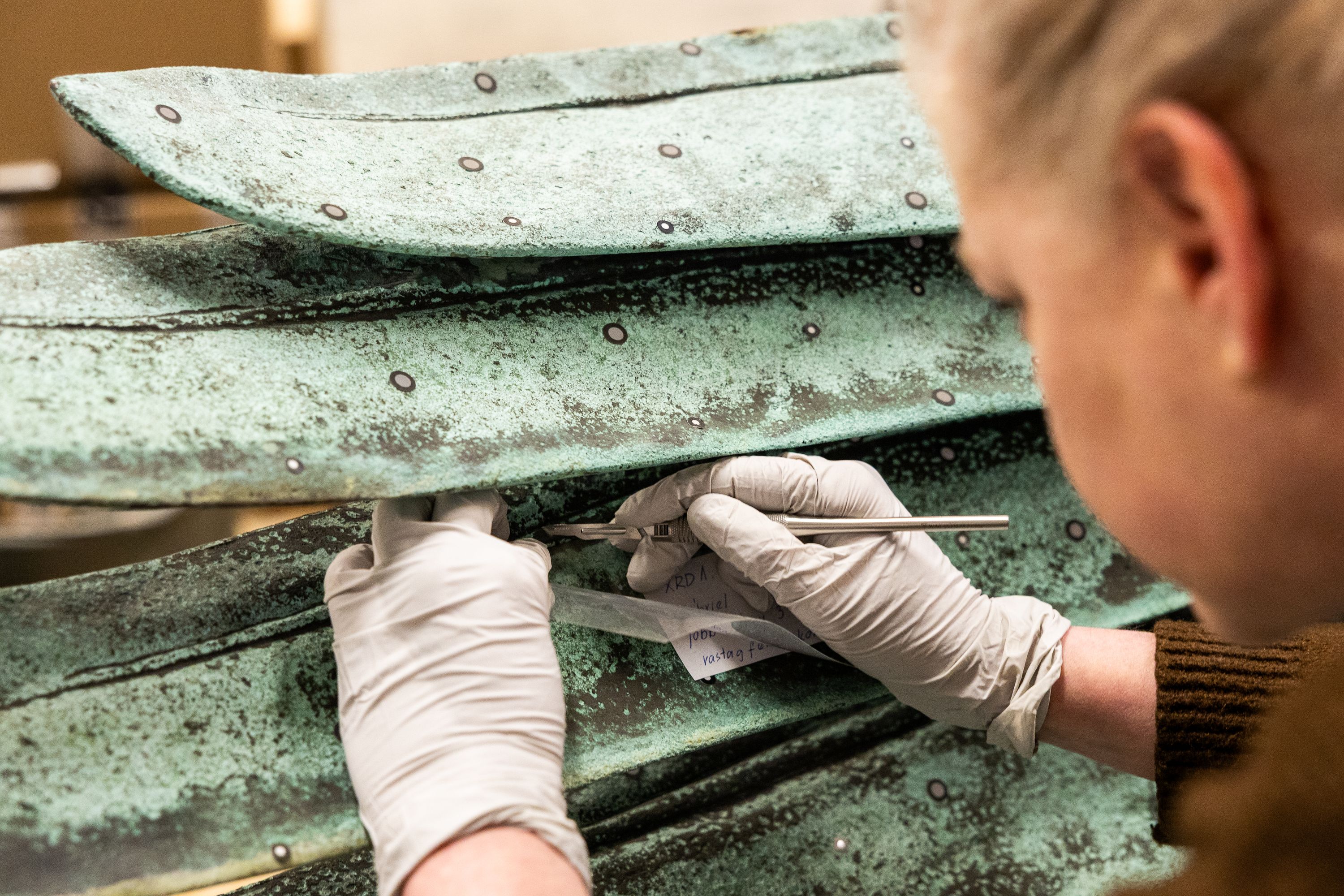
Specialists carried out advanced instrumental analyses to precisely determine the composition and stratification of the statue’s materials at a total of 32 measurement points. At one stage, the severity of the situation raised the serious possibility that the bronze body of the statue had deteriorated to such an extent that a substantial portion would need to be recast. However, in-depth material analyses confirmed that the original sculpture can be preserved and restored.

A century-old secret comes to light

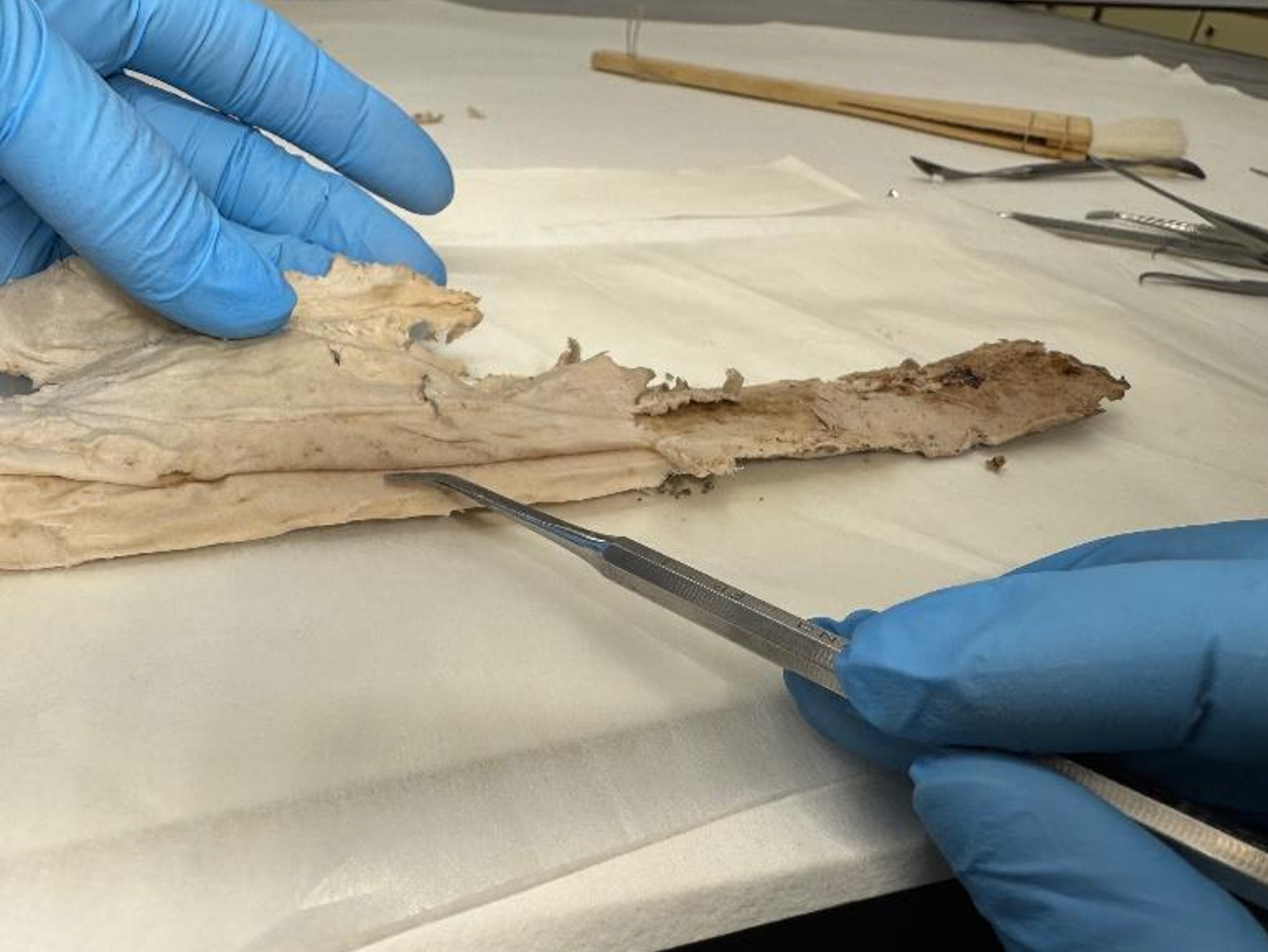
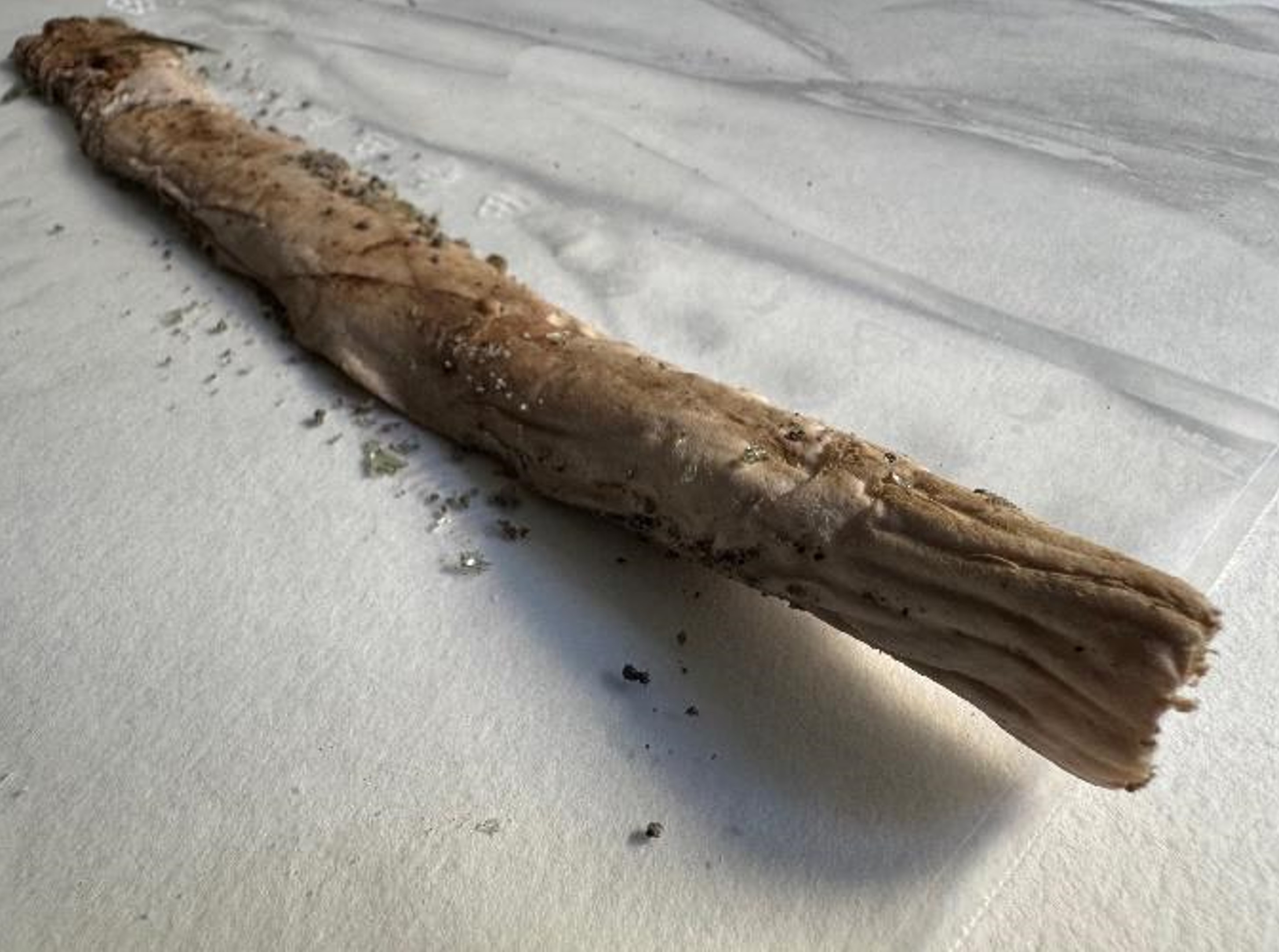
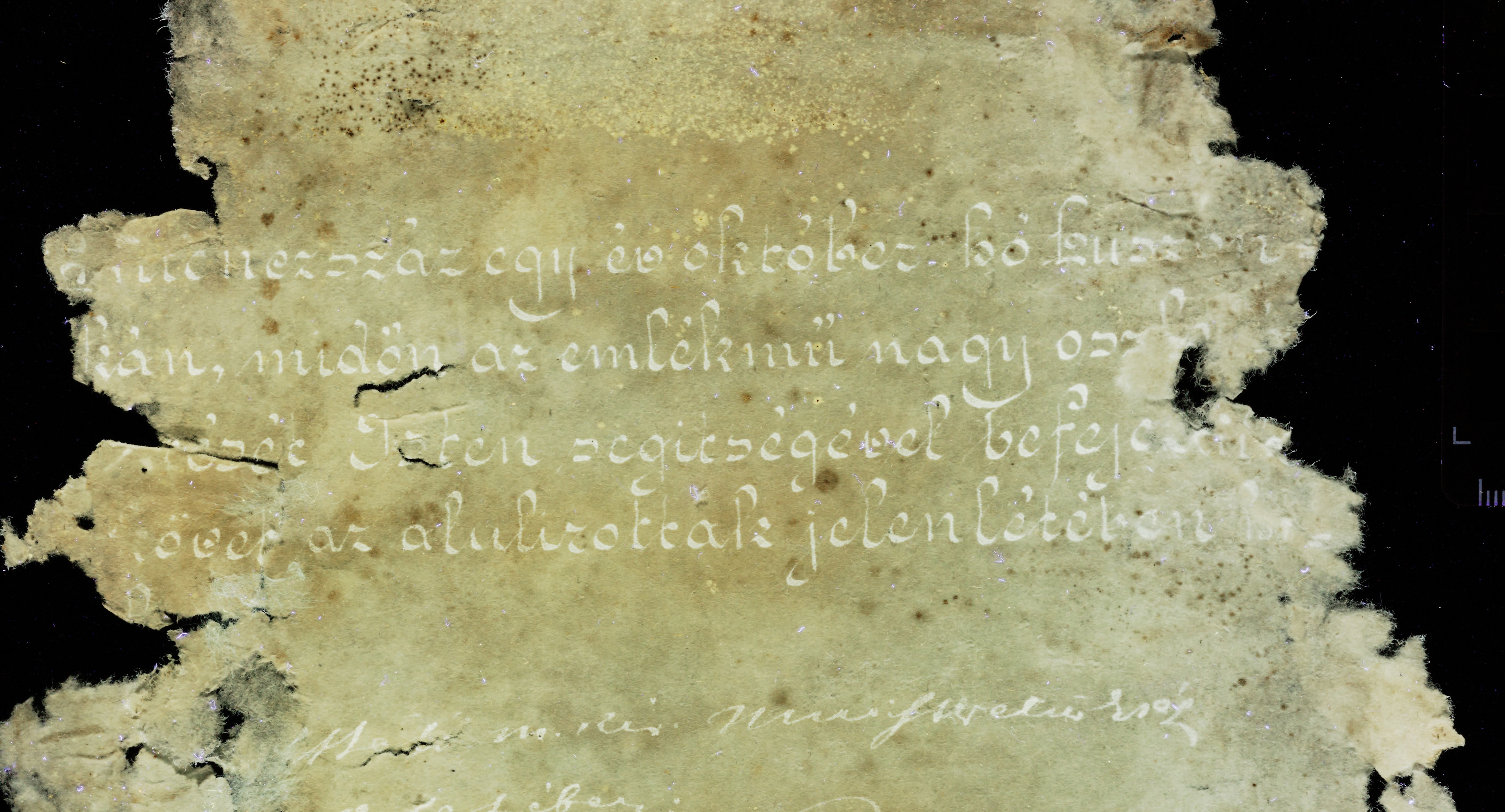
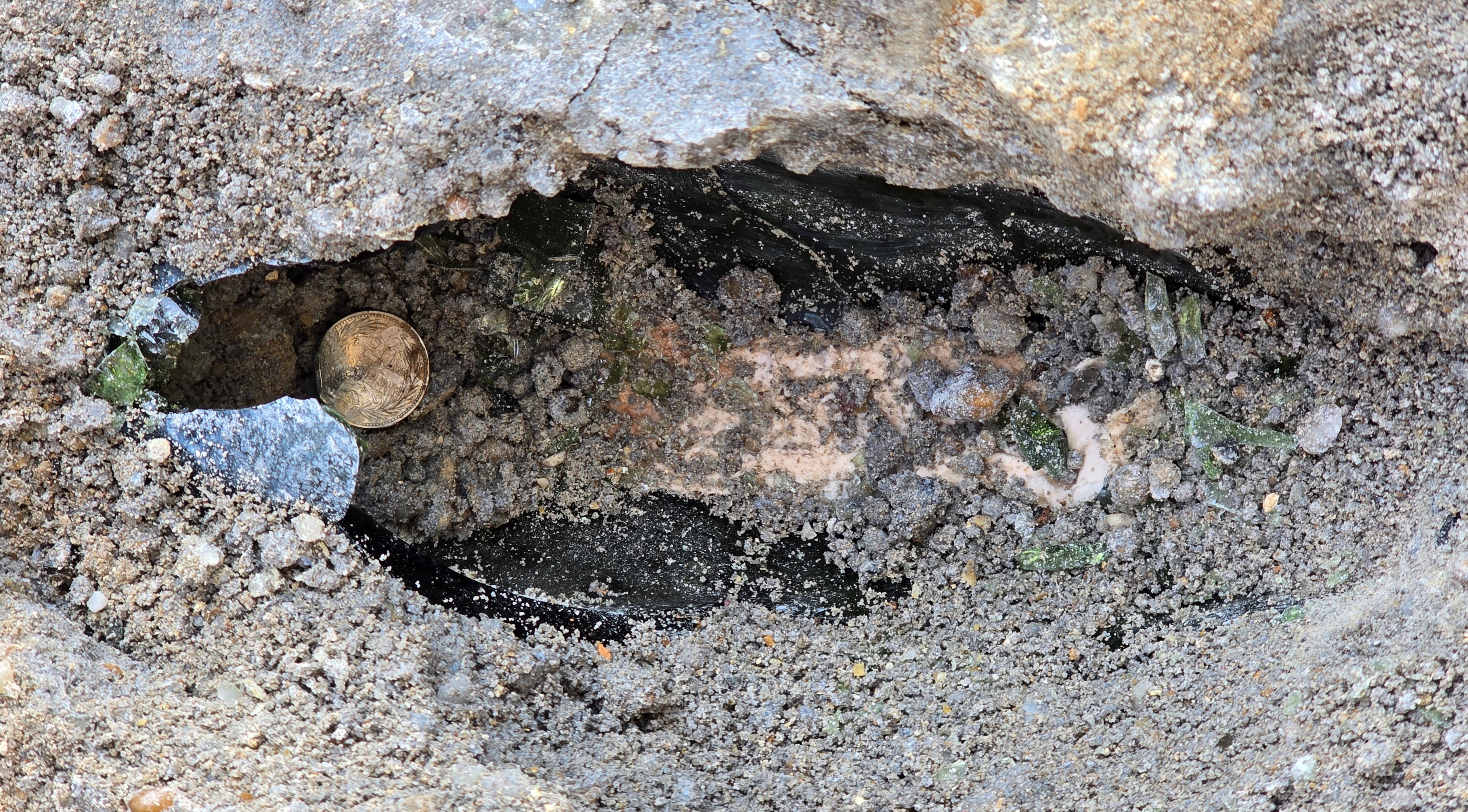
The conservation work also brought an unexpected discovery: during the opening of the statue’s concrete spherical base, a broken glass container was found, containing a rolled paper document and eight metal coins. The time capsule was most likely placed in the base at the time of the monument’s inauguration in 1901. The heavily contaminated paper was analysed in cooperation with the National Archives of Hungary, using both traditional and AI-based data analysis tools. The text is fragmentary and partially illegible due to damage to the paper: “On the twenty-[third] day of October in the year one thousand nine hundred and one, when the great col[umn] of the monument is completed with the help of God […] in the presence of the undersigned.” The signatures of Béla Romy, Albert Schickedanz, Gyula Aggházy and Adriaan Willem Weissman have been identified.

The supporting column is also under examination

The column was originally made of a highly durable spring limestone, the strength and longevity of which were recognised at the time of construction. During the current examinations, experts analysed how the structure responds to environmental factors such as wind, fluctuations in temperature and the load of the statue. Based on the measurements carried out so far, the column can be regarded as fundamentally stable and capable of safely supporting the statue of Archangel Gabriel over the long term if appropriate restoration measures are taken.

The path to full renewal


The structural restoration of the statue ensued soon after the completion of the analyses. Inter-nal [KS2.1]steel bolts were replaced where necessary, using corrosion-protected fasteners. Damaged bronze elements are being repaired by welding or, where justified, reconstructed based on 3D scanning; the more than forty supporting brackets of the capital, varying in size, are individually dimensioned and fabricated. After cleaning, areas where the patina had worn away will be given supplementary patination with the aim of restoring a uniform appearance, while preserving the existing natural surface layer.

It may rise again by the end of the year

The project is being implemented with the support of the Construction and Transport Ministry, coordinated by Városliget Zrt. and under the professional supervision of the National Heritage Institute in accordance with the highest professional and scientific standards. The timing of the statue’s reinstallation will be determined by the assessment of the supporting column and any necessary restoration work. Should these not require extensive structural intervention, the archangel may return to Heroes’ Square by the end of 2026.

Everything about the arcangel - exhibiton

Featured news