Urban Oasis Opens in the Biodome of the Budapest Zoo
2026/07/12
Actualities
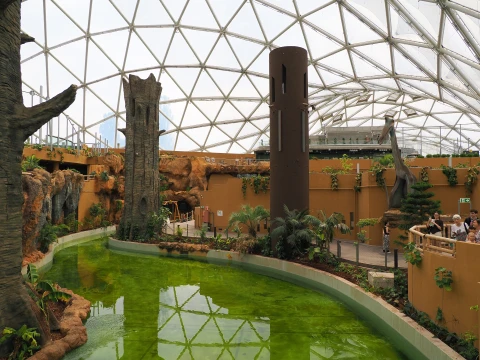
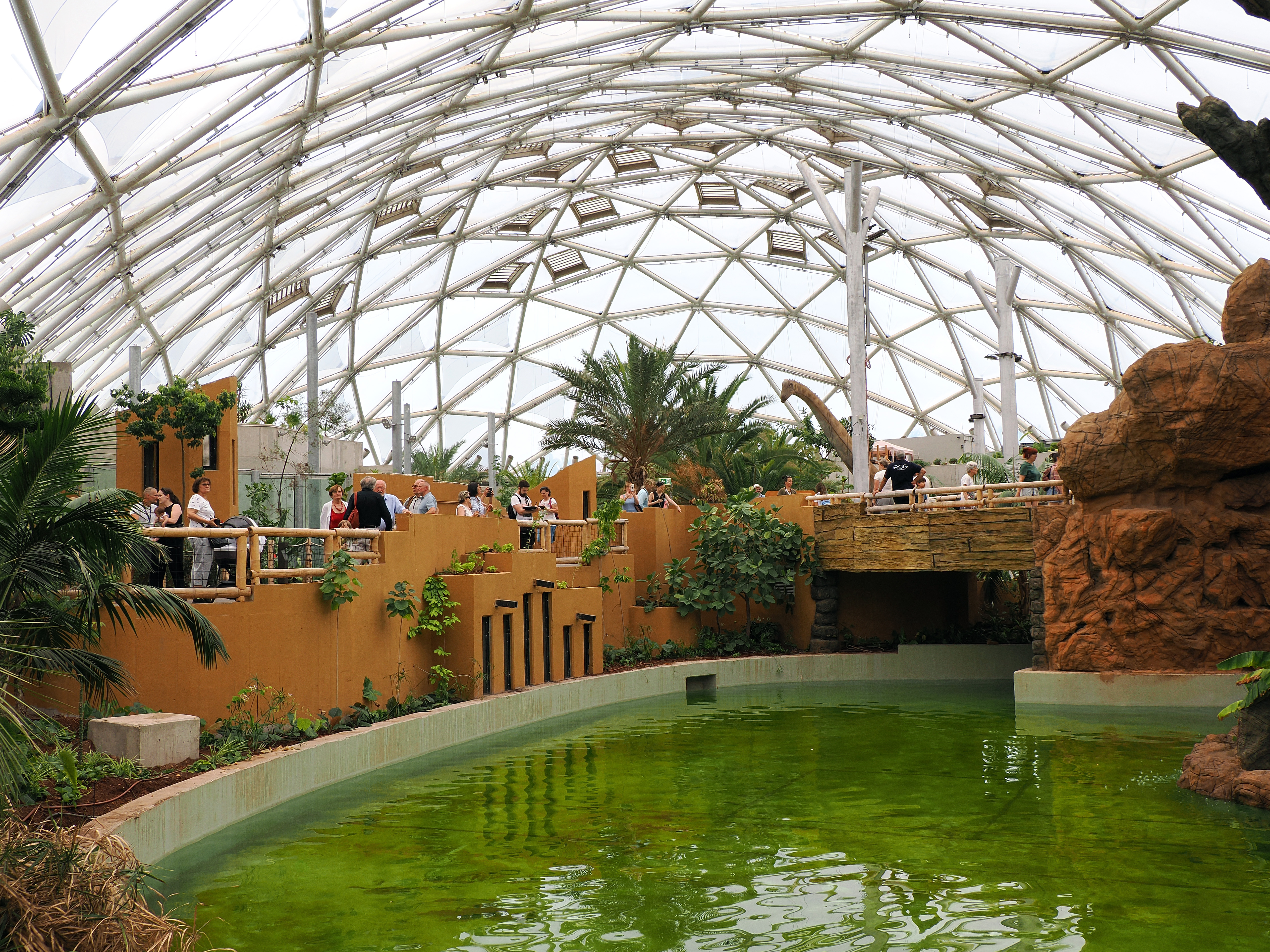
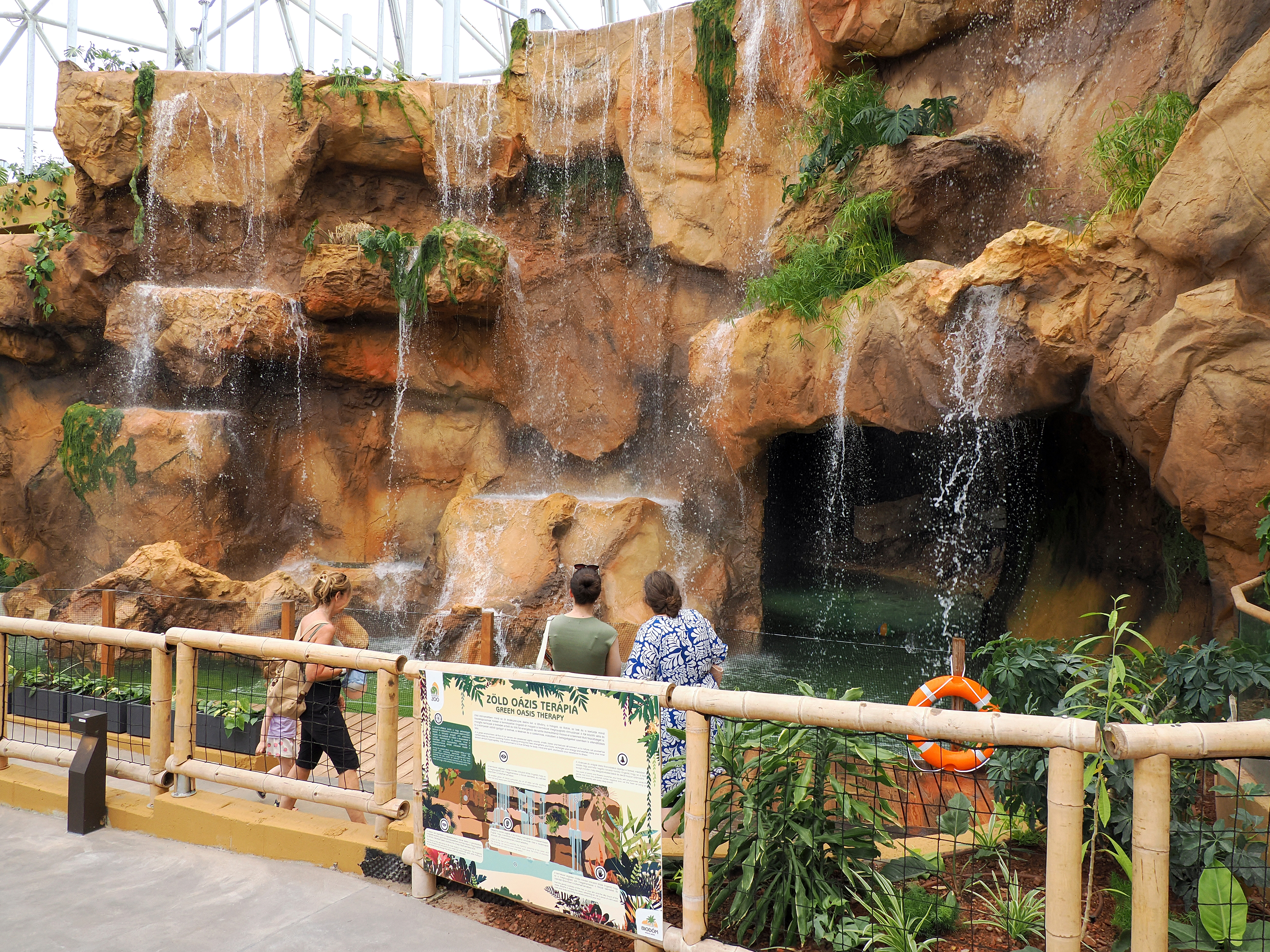
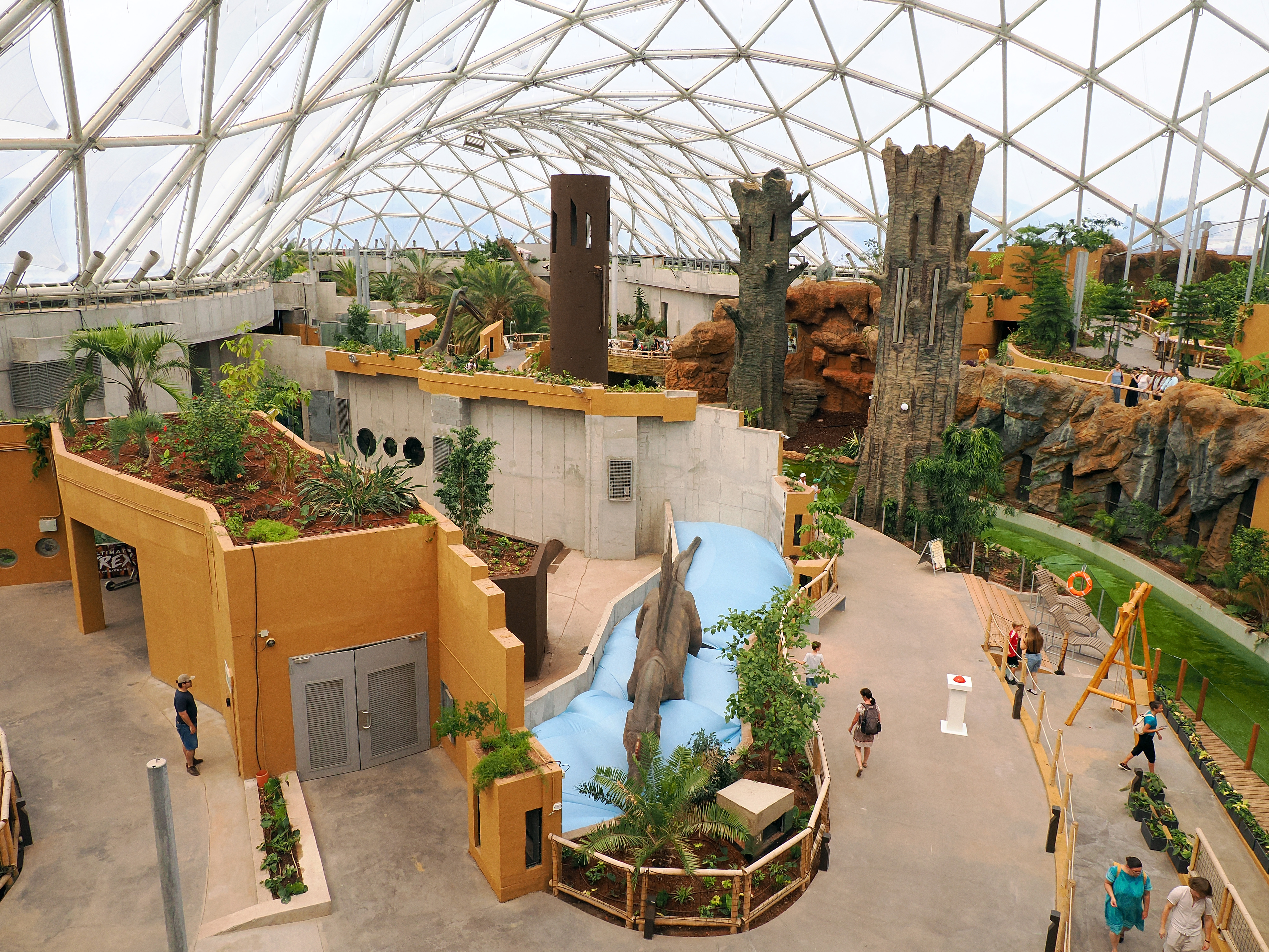
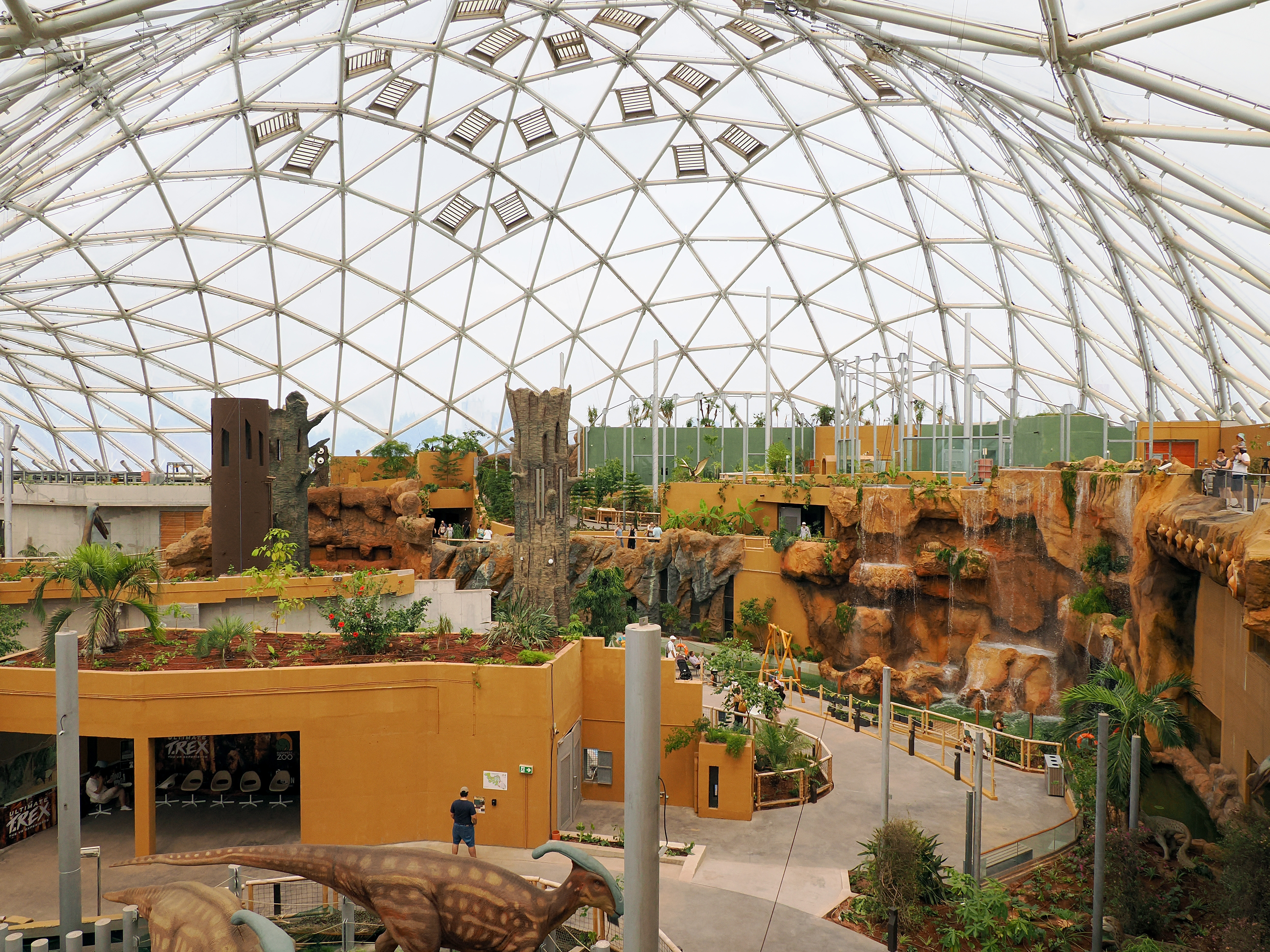
The Urban Oasis opened in the Biodome of the Budapest Zoo in the City Park on 1 July. The new indoor exhibition space with a floor area of about one hectare welcomes visitors with a genuine tropical and subtropical environment, lush vegetation and fascinating animals, including species that have not been seen by the public for generations. Visitors are also introduced to some fascinating palaeontological attractions: around thirty life-sized prehistoric reptiles can be viewed here. The Urban Oasis can be visited with Budapest Zoo admission tickets and passes, just like any other part of the Zoo.
Green Magic
The Urban Oasis is characterised above all by its luxuriant vegetation: almost one third of the one-hectare visitor area is covered with plants. The 150 planters built during the construction of the Biodome were filled with 1,740 cubic metres of special growing medium to accommodate them.
The plants now growing here come from several different sources. Some were donated to the Zoo by private individuals, many of which were much-loved specimens that had been carefully tended for years but eventually outgrew homes or stairwells. Others were newly purchased by the institution for a total of HUF 11.5 million. However, a significant proportion of the plants now found in the Biodome have been propagated and grown by the Zoo’s own gardeners over the last five years as part of a carefully planned process. The value of the plants grown by the Zoo itself and transferred from its off-site horticultural facility to the Biodome is close to HUF 50 million. Planting actually began back in 2021 with palm trees that had “retired” from the film industry. For example, the impressive date palms now on display in the Biodome were originally used as scenery by Marvel Studios.
From Hanuman Langurs to Cloud Rats
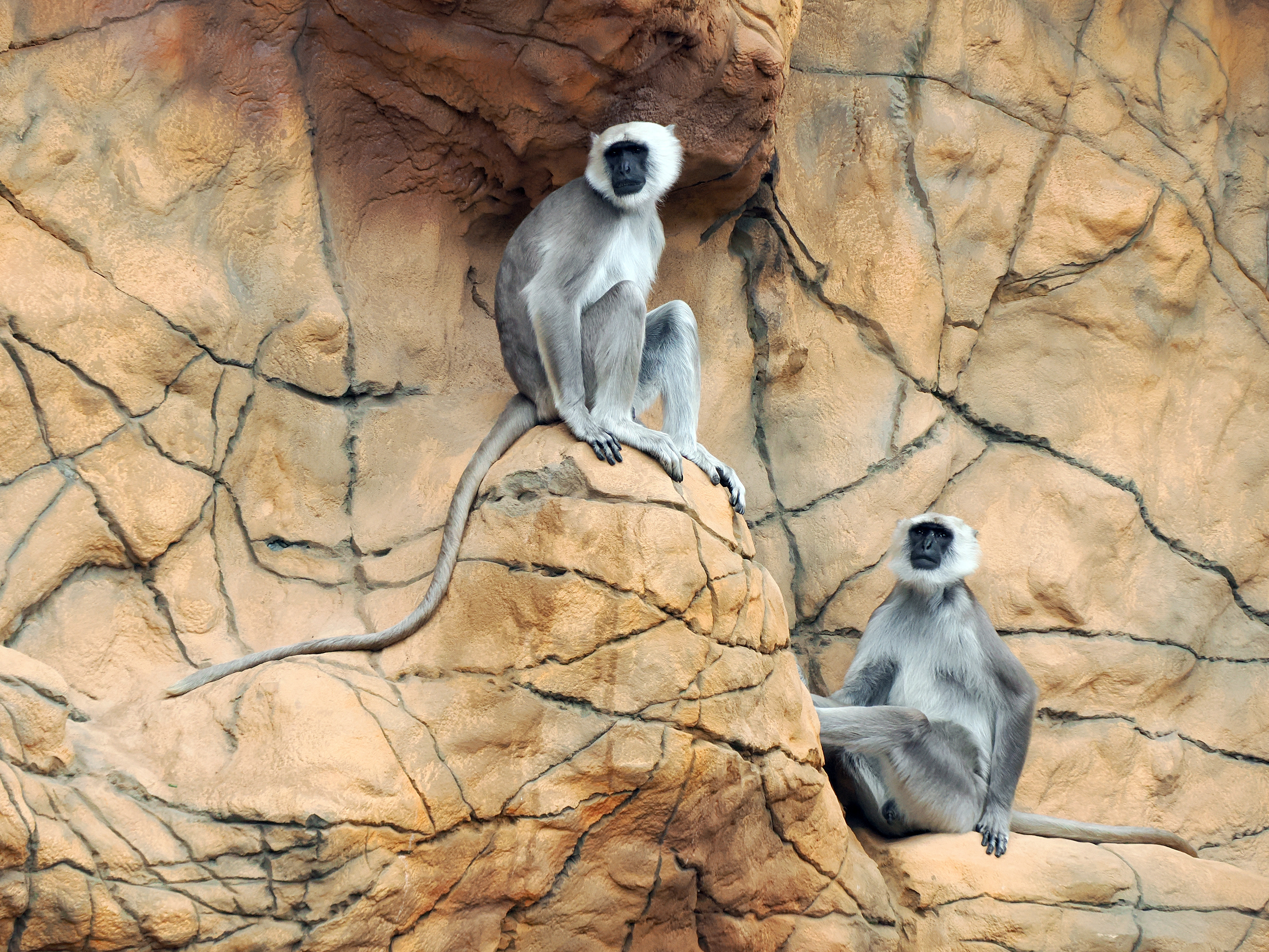
One of the most interesting animal species on display is the Hanuman langur. Native to India and Bangladesh, this animal is declining in the wild, which is why the European Association of Zoos and Aquaria (EAZA) operates a programme aimed at supporting its conservation through zoo-based breeding, in which the Budapest Zoo also participates. Visitors last had the opportunity to see Hanuman langurs here 74 years ago.
Another special species in the Urban Oasis is the critically endangered Bali myna, whose natural range is restricted to a single national park on the Indonesian island of Bali. Its wild population is estimated at fewer than fifty individuals, making zoo conservation programmes particularly important for its survival. For this reason, a European zoo breeding programme has also been established for the Bali myna.
The Palawan peacock-pheasant is native to Palawan in the Philippines. Its numbers are declining in its natural habitat, and the International Union for Conservation of Nature (IUCN) classifies the conservation status of the species as vulnerable.
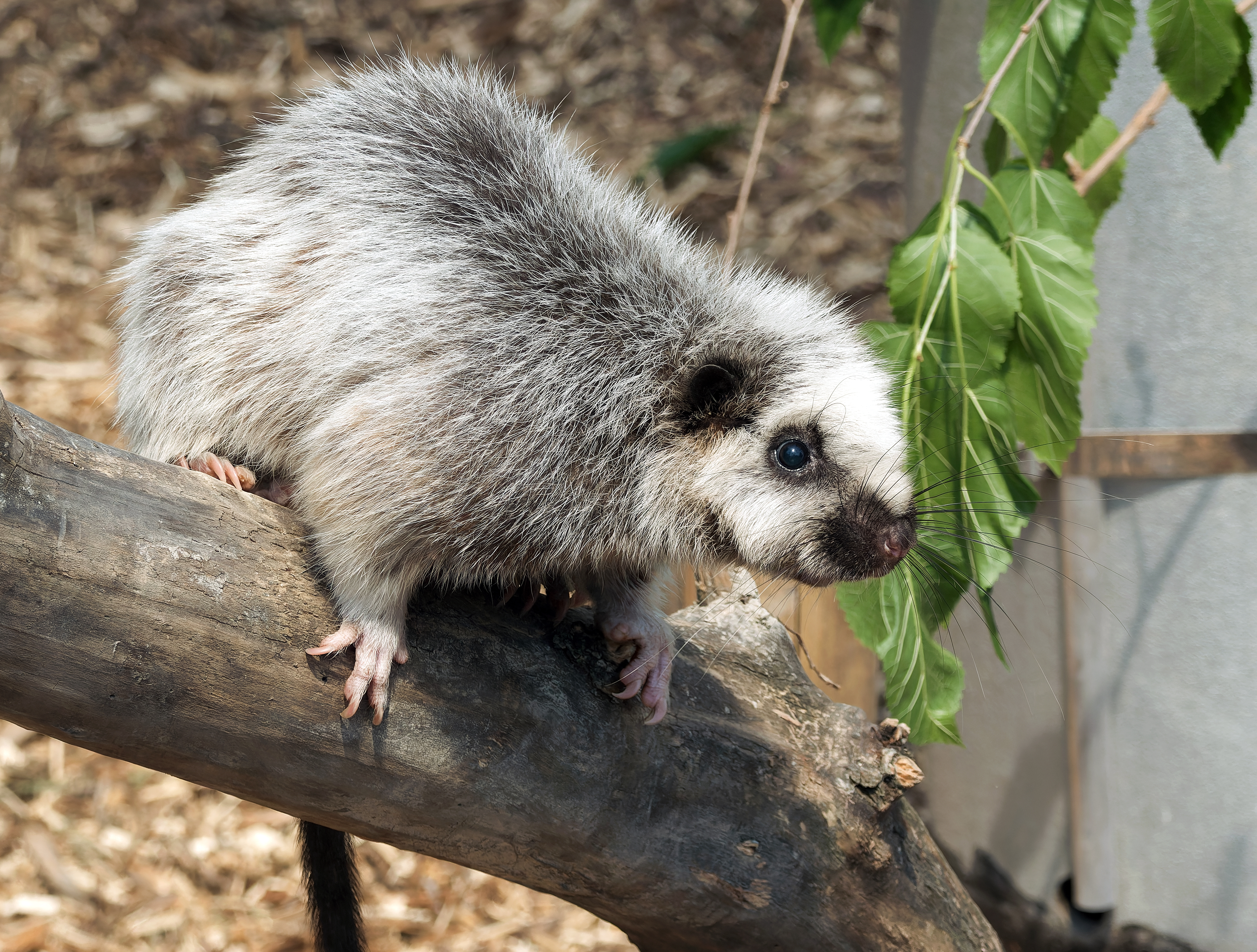
The Luzon cloud rat is also native to the Philippines. It belongs to the order of rodents and within this to the family Muridae, which includes mice and rats. Weighing 2-3 kilograms, it is actually one of the largest members of this family. Its distinctive fur and colouring lend it the appearance of a giant panda plush toy.
In addition to the above species, visitors to the Urban Oasis can encounter several other fascinating animals, including the endangered Sakishima grass lizard, Henkel’s leaf-tailed gecko, found only in Madagascar and classified as vulnerable, as well as African spurred tortoises, the third-largest land tortoises in the world.
Dinosaurs and "The Hidden Colours of Nature" in the Biodome
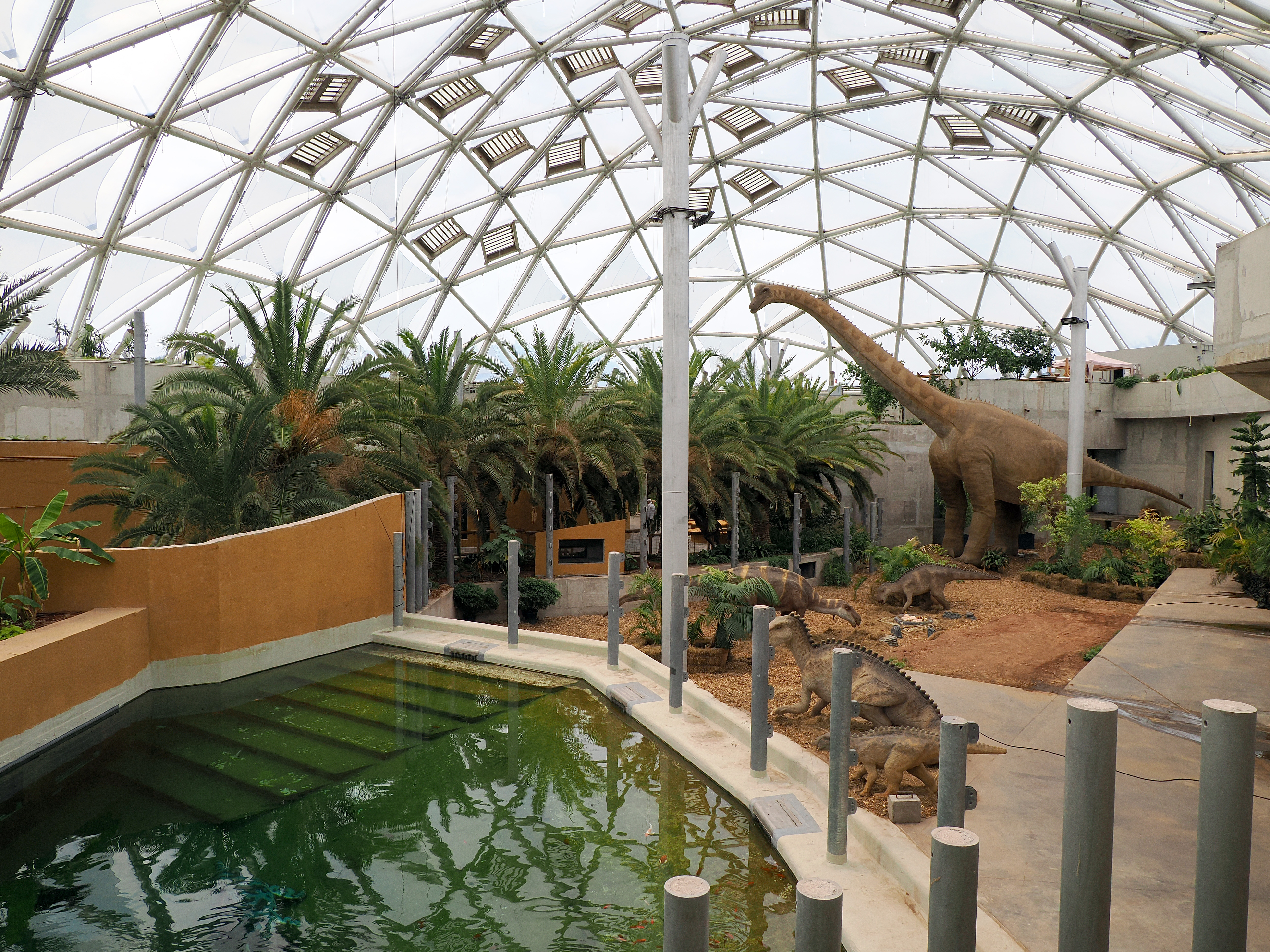
Besides the many living animals and plants, the Biodome also introduces visitors to creatures from the prehistoric world. The largest of the prehistoric reptiles on display is a life-sized reconstruction of a Brachiosaurus, measuring 25 metres in length and almost 12 metres in height. Well-known and popular prehistoric animals are also represented of course, including the predatory Tyrannosaurus, the plate-backed Stegosaurus, and the Spinosaurus, recognisable by the distinctive sail on its back. The reconstruction of the Quetzalcoatlus is particularly impressive: this giant flying reptile may have had a wingspan of around 12 metres. Visitors can also see a reconstruction of the Hungarosaurus: the remains of this dinosaur were discovered by Hungarian palaeontologists in the Bakony Mountains, near Iharkút.
One of the corridors of the Biodome accommodates the photography exhibition titled Our Invisible Reality. The human eye can perceive only a narrow range of light, while certain animals are also able to see ultraviolet (UV) light. The exhibition presents extraordinary photographs, displayed on interactive touchscreens, which were taken under UV illumination by geologist, geographer and cave photographer Ágnes Berentés.
Featured news
-
![Freddie Mercury as You Have Never Seen Him Before]()
-
![Iconic Statue of Archangel Gabriel on Heroes’ Square Brought Back to Life]()
Iconic Statue of Archangel Gabriel on Heroes’ Square Brought Back to Life
-
![The Civilisation of the Qin and Han Dynasties – The First Chinese Emperor’s Terracotta Warriors in the Museum of Fine Arts]()
The Civilisation of the Qin and Han Dynasties – The First Chinese Emperor’s Terracotta Warriors in the Museum of Fine Arts
-
![The Marriage of Heaven and Hell – Works by William Blake at the Museum of Fine Arts]()
The Marriage of Heaven and Hell – Works by William Blake at the Museum of Fine Arts
-
![A new exhibition exploring Freddie Mercury’s personal story to open at the House of Music Hungary]()
A new exhibition exploring Freddie Mercury’s personal story to open at the House of Music Hungary
-
![Hungarian Debut after Global Success: Szabolcs Bozó’s Solo Exhibition Opens at NEO Contemporary Art Space]()
Hungarian Debut after Global Success: Szabolcs Bozó’s Solo Exhibition Opens at NEO Contemporary Art Space
-
![World-renowned Architect of House of Music Hungary Sou Fujimoto Gives Highly Successful Lecture at Expo 2025 Osaka]()
World-renowned Architect of House of Music Hungary Sou Fujimoto Gives Highly Successful Lecture at Expo 2025 Osaka
-
![LISTEN. – A Musical Journey Around the World]()
LISTEN. – A Musical Journey Around the World
-
![Take a selfie with Archangel Gabriel!]()
Take a selfie with Archangel Gabriel!
-
![Discover the enigmatic world of video art through Bill Viola’s Masterpieces!]()
Discover the enigmatic world of video art through Bill Viola’s Masterpieces!
-
![THE MUSEUM OF ETHNOGRAPHY OPENS ITS LARGEST EVER, MOST COMPREHENSIVE PERMANENT EXHIBITION]()
THE MUSEUM OF ETHNOGRAPHY OPENS ITS LARGEST EVER, MOST COMPREHENSIVE PERMANENT EXHIBITION